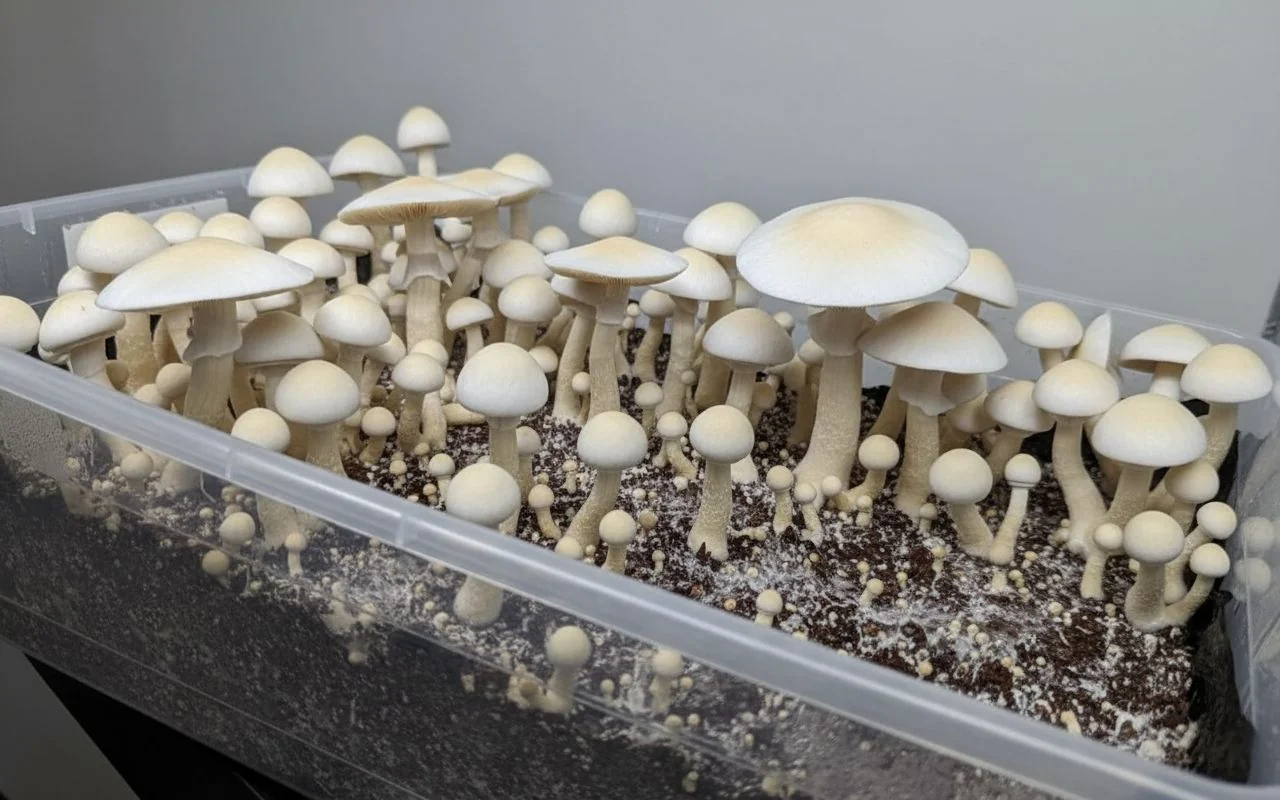
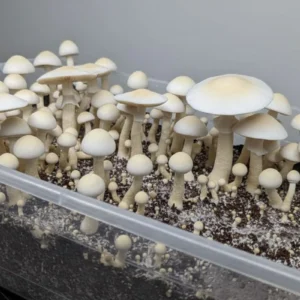
Albino Treasure Coast (also known as Eucharistic Treasure Coast) is a visually striking Eucharistic mutation of the classic Treasure Coast strain of Psilocybe cubensis. Originating from the Treasure Coast region of Florida, this rare strain features pure white to pale ivory caps and stems. Blue bruising on injury is subtle. This combination makes it one of the most beautiful cubensis varieties.
It requires intermediate patience, as fruiting is slower than standard Treasure Coast. However, it rewards growers with high yields, consistent flushes, and noticeably higher potency due to slower maturation. Fruit bodies are large, robust, and impressive, with multi-spore deposits that are deep black or contrasting against the white helium.
Ideal for microscopy, taxonomic study, or collectors. Includes sterile syringe or grow kit with substrate and instructions. For research purposes only — not for human consumption or cultivation in restricted areas. Always verify local laws before purchasing.
What are the Medicinal Uses for Albino Treasure Coast?
Albino Treasure Coast has not been clinically studied alone. Psilocybe cubensis, its parent, has undergone several studies on psilocybin. Thus, this strain carries similar medicinal implications with potential mental health benefits. Use should be respectful and follow documented protocols.
Potential Benefits:
- Mental Health Applications: The active components, psilocybin and psilocin, have displayed powerful effects in treating depression, treatment-resistant depression, PTSD, anxiety (especially end-of-life anxiety), and addiction
- Psychedelic-Assisted Therapy: High-potency strains like Albino Treasure Coast generate strong ‘ego dissolution’ moments that promote clarity, introspection, and emotional breakthrough
- Neuroplasticity Enhancement: Additional reported benefits include alleviation of chronic migraines, increased emotional regulation, and cognitive flexibility
- Pattern Disruption: May help disrupt neurochemical patterns of negative self-talk or trauma responses through guided psychedelic experiences
Though not recognized as medicine in many jurisdictions, psilocybin is currently undergoing accelerated review and decriminalization due to its psychotherapeutic utility. When administered in appropriate dosage ranges and with therapeutic intention, Albino Treasure Coast may lead to disrupted neurochemical patterns of negative self-talk or trauma responses, helping pattern rewiring through guided psychedelic experiences.
Important: Global movements advocating for entheogenic rights increasingly recognize strains like this as tools for mental and spiritual well-being. Always consult healthcare professionals before considering therapeutic use.
What Mushrooms Look Like Albino Treasure Coast?
Albino Treasure Coast has a relatively unique appearance compared to other Psilocybe cubensis strains due to its leucistic or albino phenotype. However, novice identification in wild scenarios may confuse albino cubensis strains with other white or pale mushrooms, some of which are deadly or inedibly toxic:
- Galerina marginata: A small, brownish to cream-colored mushroom that grows on wood and carries deadly amatoxins. Has brown spore prints vs. purplish-black spore prints of Psilocybe cubensis
- Mycena species: Can appear pale or white and grow in moist habitats. Generally non-lethal but many are mildly toxic. Significantly smaller than Psilocybe cubensis and lack bluish bruising
- Clitocybe species: Some appear white and grow in similar habitats but lack the characteristic bluish bruising of psilocin oxidation
- Other Albino Cubensis: Albino Treasure Coast can visually resemble other albino cultivars like Albino A+ or Leucistic Golden Teacher
Safety Note: Due to the hybrid nature of Albino Treasure Coast and general safety principles, foraging is not recommended. Instead, obtain spores and grow under verified conditions with known genetics. Always verify the source, morphology, and bruising patterns before considering any mushroom for ingestion. Mistaken identity when hunting mushrooms in the wild can result in severe liver damage or death.
How to Cultivate Albino Treasure Coast
Difficulty Level: Intermediate – more sensitive than standard cubensis strains due to albino traits requiring careful environmental control.
Substrate Requirements:
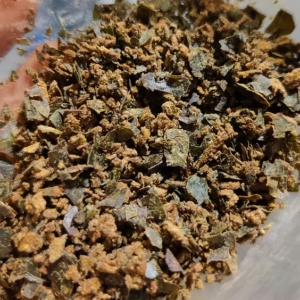
- Sterilized milo grain bags for optimal nutrition and colonization speed
- CVG substrate (Coco Coir, Vermiculite, and Gypsum) – cleaner modern alternative to manure
- All-in-one injection-ready grow kits for beginners
- Traditional manure mixes (though CVG is recommended for indoor cultivation)
Environmental Conditions:
- Colonization Temperature: 75°F to 80°F (24°C–27°C)
- Fruiting Temperature: 70°F to 75°F (21°C–24°C)
- Humidity: 90%–95% during fruiting
- Air Exchange: Fan 3–5 times daily for fresh air circulation
- Lighting: 12/12 light cycle with indirect light (direct light may damage albino mycelium)
Timeline:
- Colonization: 10–14 days under optimal conditions
- Pinning stage: Requires consistent humidity and temperature
- Multiple flushes: Consistent yields under good conditions
Important Note: Unlike normal pigmented strains, albino variants can be more susceptible to light-related stressors and environmental fluctuations. The unique ghost-white coloration adds elegance to grow setups, and observing the bluish bruising as alkaloids oxidize during growth is often as mesmerizing as consuming them. CVG substrate reduces contamination risks compared to traditional manure-based substrates.

Reviews
There are no reviews yet.